Showing posts with label D. Appendix 1: research for main product. Show all posts
Showing posts with label D. Appendix 1: research for main product. Show all posts
Saturday, 29 April 2017

Wednesday, 26 April 2017
The Representation of Women
Who wrote about the “final girl” in 1992?
Carol Clover wrote about the final girl.

In what book did they write about the “final girl”?
She wrote about the final girl in her book Men Women and Chainsaws.
List three traits of the “final girl”/three ‘conventions’.
Three traits the final girl holds in a horror movie are:
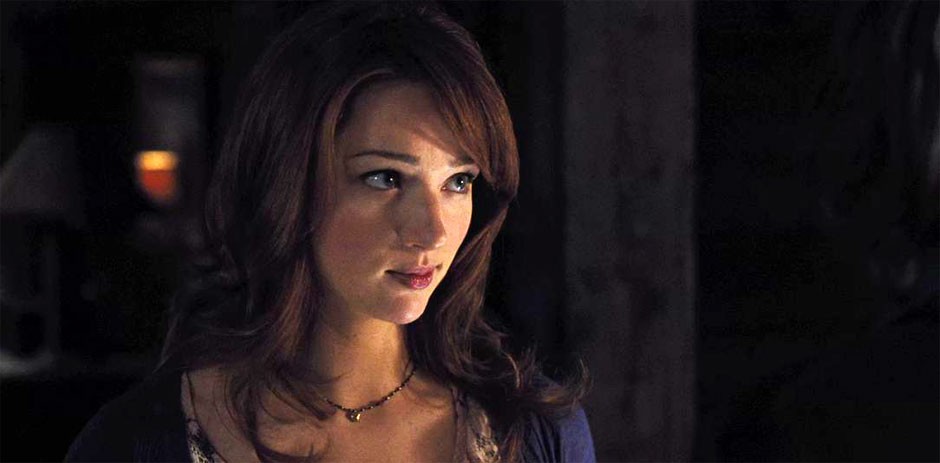
-An androgynous name and dress sense. For example, the name Laurie, and Dana are not typical "girlie" names, and they don't wear typically "girlie" clothes either. Compared to Laurie's friends, Laurie wears very different clothes that could be seen as "boyish" and "unfashionable".
-The final girl is often a virgin, to differ from her sexually active friends. Being a virgin holds connotations of them being pure and innocent. Often, the characters who have sex in a horror movie, die early on, as they're seen as distracted.
-Lastly, the final girls behaviour is very different from other characters. She is often reserved, clever, and much more aware of things going on around her. These traits assist the final girl to live out of all of her friends, as they're often portrayed as stupid or distracted.
Who wrote about existing research on women’s roles in media texts in 1983?
Jeremy Tunstall wrote about women's roles in media texts, and he found that women were often seen to be portrayed as four roles.
The four roles were:
-Sexual
-Marital
-Consumer
What was the only genre in which the ratio of males to females was more equal?
The genre that held an equal ratio of men to women was Primetime TV adverts.
Why does the reading suggests that Ripley (Alien) is "more progressive" than Lara Croft?
This is based on both the girls physical appearances. Lara Croft is seemingly dressed to please the heterosexual males, showing off her assets, whereas Ripley is wearing less skimpy, more modest outfit. Lara is being objectified and sexually exploited even though she's seen to be a forward movement towards equality. Women and their bodies are used to sell a lot of products today. Adverts will use a Women to sell a man products like cars or razors.

The three C's are:
-Cooking
-Cleaninig
-Caring
Typically, it's the women's job to cook for the family, clean the house, and care for the children.

Who wrote Visual Pleasure and Narrative Cinema?
Laura Mulvey wrote Visual Pleasure and Narrative Cinema.
(Briefly) describe what is meant by the ‘male gaze’
Give an example
The male gaze is the way the camera looks at a woman, from the male's point of view. She said that the cinematic gaze is constructed by a mans perspective. Camera angles and movements will be used to objectify a woman, for example panning up their legs, or close ups of specific assets. This is seen as denying women of subjectivity and encourages society to view women as objects for male pleasure.
Which magazine removed the male centrefold in the 1980s and why?
Cosmopolitan removed the male centrefold because women found it more humerous.
Sunday, 13 November 2016
Friday, 11 November 2016
Monday, 17 October 2016
Men, Women and Chainsaws reading
What does Clover mean by female victim-hero?
The main female character whose victimisation has given her a new force to the anger that subsidises her own act of horrific revenge. We are on the side of this girl and she becomes the female victim-hero.

Why does Clover say that males relate to females in horror films, in particular the "Final Girl"?
Clover stated that the boys can relate to the female characters because of the situations they're put in. the boys relate to bullying because they have experienced it themselves, even if it may be minor. For example in the film Carrie, the main female character is mocked for starting her period in the shower by the other girls. Male viewers can relate to the girl's fear and pain she feels because he has "had his gym shorts pulled down" or "his glasses thumb-rubbed in study hall".


Why does Clover suggest that horror research is problematic?
Pin-pointing the target audience is difficult and is less important for films that TV programmes. She says "there is no neat answer [...] horror movies tend to be made less on the basis of audience statistics than on the basis of hunch". Furthermore, some horror movies have short theatrical runs or no theatrical release at all and this makes audiences "largely hidden from research view".


Who does Clover suggest makes up the typical horror audience?
Clover suggests that most of the horror audience is made up of males. The most common audience members in he cinema are
- young men (frequently in a group but also solo)
- male-female couples of various ages (although mostly young)
- solo "rogue" males (older men of ominous appearance)
- adolescent girls in groups
Above all this though, young males are the unmistakable target market for horror movies.

Was there parity between horror audiences in regards to those who watched horror films at the cinema and those who watched them at home through rentals?
Clover found that the audience members who chose to rent the genre were completely different to the cinema-goers. She found that a lot of middle-class, middle-aged people of both sexes have "came out" to her admitting that they enjoy the horror genre.- young men (frequently in a group but also solo)
- male-female couples of various ages (although mostly young)
- solo "rogue" males (older men of ominous appearance)
- adolescent girls in groups

Was there parity between horror audiences in regards to those who watched horror films at the cinema and those who watched them at home through rentals?

What are the two ways identified by Clover in which audiences identify with characters?

Saturday, 15 October 2016
Tuesday, 4 October 2016
Narrative theory in relation to Halloween
The Classical Hollywood Narrative is based around Tzvetan Todorov's theory, where the film starts off as an initial equilibrium, which is disturbed by a disequilibrium,ending with a new equilibrium or reestablished equilibrium. Tzevetan Todorov's ideas are based around the CHN. I think looking at The CHN is relatively useful for looking at media texts as some do follow these rules and it is quite a common convention. It helps for the audience to know what to expect and reassures them that this is the basic plot line it will follow. Although many story lines nowadays are challenging this and equilibriums vary in places or there aren't any at all. Halloween doesnt follow the classical narrative as the very beginning of the film starts off with a disequilibrium where Micheal kills his sister as a young boy. Although all seems well after this scene, the beginning is tragic and brutal.


Vladimir Propp was a Russian critic who came up with eight different character types and 31 narrative functions. These character types are: the villain, the hero, the donor, the helper, the princess, her father, the dispatcher and the false hero. He decided on these by reading hundreds of folk tales to see if they shared any structures. In Halloween, the villain would've been Micheal Myers, and the hero: Laurie as she defeats the villain. Doctor Loomis is represented as the helper as he aids the hero by locking away Micheal Myers. The dispatcher and princess would be the children Laurie has to look after as she is responsible for them and they set Laurie put on the quest to defeat the villain. The sheriff could've been the false hero as his intentions were good but he didn't do much for his town or his people. A lot of the character types don't fit with any characters in the film and some only loosely. Other story lines are more fitted to Propp's theory but others don't. Almost all narratives include a hero and a villain.

Binary oppositions are sets of opposite values which reveal the structure of media texts. Claude Levi-Strauss looked at narrative structure in terms of binary oppositions. I think that looking at binary oppositions is useful for looking at media texts as it shows the audience the differing features and enhances them as they make each other stand out and become more prominent. Some examples of binary opposition in Halloween are: young-old (the innocence of the youngsters and the wiser older people), good-evil (purity of the "goodies" and sinfulness of the "baddies"), innocent-stupid (Laurie's innocence in comparison to her friends' attitudes and behaviors), safety-danger (the safe environments contrasting the dangerous unknown ones) and inside-outside (outside the familiar homes and inside the houses).

Bordwell and Thompson defined narrative as "a chain of events in a cause-effect relationship, occurring in time and space". By this, they mean a narrative begins with one situation, a series of changes occur according to a pattern of cause and effect; finally, a new situation arises that brings the end of the narrative. The events manipulate how we see the story line through time and space. We link the separate events together on our own and this creates the narrative. This is important when understanding media texts as the theory helps us to understand that our brains link the events together even if it is not directly said that they're connected. In Halloween, we assume the killing of Micheal Myers' sister caused the killing of Laurie's friends later on in the film. The situations happened separately and we link them together due to their similarities and the convenience. Another cause-effect element in the movie was the fact that Micheal Myers killed his sister and was then locked away in a mental institution for 15 years. These events happened but we are informed of them at different times. We link them together as though they're related because of the apparent connection between the two happenings. Events we hear about but do not see, are the period of time Micheal Myers was locked away for, and also the robbery of the Halloween masks from the local shop.


Binary oppositions are sets of opposite values which reveal the structure of media texts. Claude Levi-Strauss looked at narrative structure in terms of binary oppositions. I think that looking at binary oppositions is useful for looking at media texts as it shows the audience the differing features and enhances them as they make each other stand out and become more prominent. Some examples of binary opposition in Halloween are: young-old (the innocence of the youngsters and the wiser older people), good-evil (purity of the "goodies" and sinfulness of the "baddies"), innocent-stupid (Laurie's innocence in comparison to her friends' attitudes and behaviors), safety-danger (the safe environments contrasting the dangerous unknown ones) and inside-outside (outside the familiar homes and inside the houses).

Bordwell and Thompson defined narrative as "a chain of events in a cause-effect relationship, occurring in time and space". By this, they mean a narrative begins with one situation, a series of changes occur according to a pattern of cause and effect; finally, a new situation arises that brings the end of the narrative. The events manipulate how we see the story line through time and space. We link the separate events together on our own and this creates the narrative. This is important when understanding media texts as the theory helps us to understand that our brains link the events together even if it is not directly said that they're connected. In Halloween, we assume the killing of Micheal Myers' sister caused the killing of Laurie's friends later on in the film. The situations happened separately and we link them together due to their similarities and the convenience. Another cause-effect element in the movie was the fact that Micheal Myers killed his sister and was then locked away in a mental institution for 15 years. These events happened but we are informed of them at different times. We link them together as though they're related because of the apparent connection between the two happenings. Events we hear about but do not see, are the period of time Micheal Myers was locked away for, and also the robbery of the Halloween masks from the local shop.
Friday, 23 September 2016
Thursday, 22 September 2016
Thursday, 8 September 2016
Subscribe to:
Posts (Atom)